Performance Paradigm promotes discussion among scholars, curators and practitioners of performance in the Asia-Pacific region and beyond. Founded in 2005, it is one of the field’s first open access, peer-reviewed journals.
No 20 (2025): The Missing of it All: Archives, Artists, and Absences
Edited by Chris Hay, Sarah Peters, and David Simes.
Click through for Performance Paradigm 20.
Articles by: Nicola Hyland, Alexandra Tálamo, Meredith Rogers, Davina Wright, Missy Mooney, Jo Palazuelos-Krukowski, Sue-Anne Wallace, Izabella Nantsou, Matt Bapty, and Asher Warren.
Interviews and dialogues with: Tiffany Knight, Nescha Jelk, Fleur Kilpatrick, Kirste Vandergiessen, and Sarah Peters.
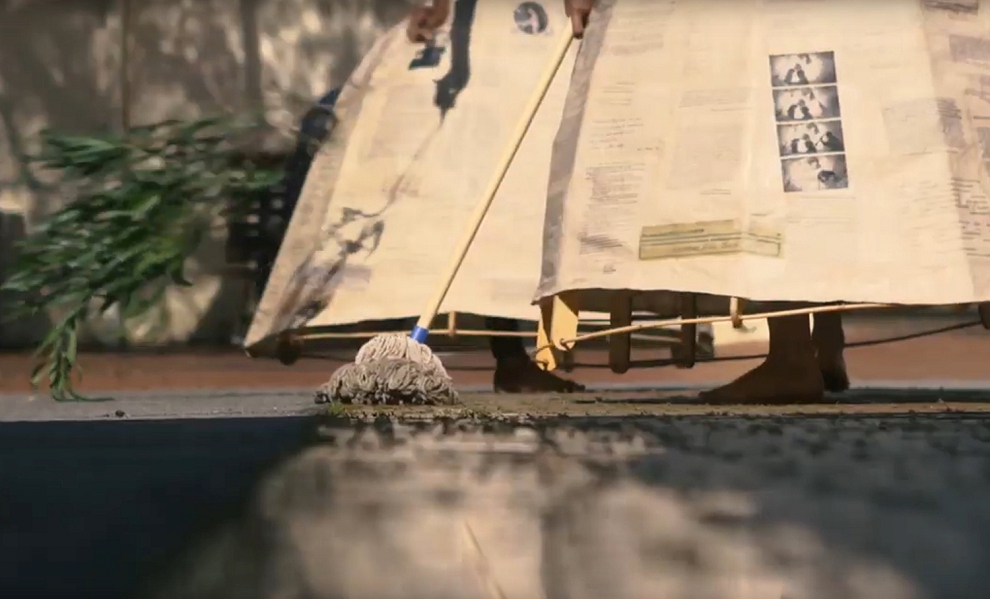
Cover image shows the Unbound Collective's work Sovereign Acts | In the Wake. Presented as part of Tarnanthi: Festival Contemporary Aboriginal and Torres Strait Islander Art, 2021. The editors are grateful to Ali Gumillya Baker, Faye Rosas Blanch, Natalie Harkin, and Simone Ulalka Tur for their permission to use this image.